Sunday, November 9, 2014

Down the Island Chain

It was a whirlwind 3 months stateside. Between enjoying friends, family and a NOLA life, getting our house on 7th St painted and helping John Edward, the time went way too fast.
In the travel lift ready to splash down!

On October 28th, we arrived back in Puerto Rico. Wahoo had already been moved to the work yard of Puerto Del Ray Marina in Fajardo, PR. Her bottom had been cleaned and repainted (something necessary at least every two years).

As is normal, on arrival, there was work to be done:
We brought a new depth transducer, something that goes in the hull and connects at the helm to the depth sounder. We've been without a working depth sounder since mid-2013.

A new stove was delivered from West Marine (yay!!!!!)
yucky old stove
beautiful new stove

In all we had six 50 lb boxes of parts and boat supplies to either get installed or stored. (We only had to pay for 2 thanks to Southwest for allowing us 2 pieces of checked luggage each). On top of that we weren't prepared for what would happen to Wahoo while she was stored ashore with no electricity and no one to keep her clean. Whew - a coat of mildew everywhere and boatyard dirt all over the decks, yuck.

Needless to say first order of business for me was to get some white vinegar and do a general cleaning. Roy was busy with the depth transducer, the stove and getting the chart plotter and helm back together. Splash day was Oct 30. Afterwards we spent two days in a slip at the marina as we provisioned and got Wahoo ready to, at least, be able to motor to Culebra.  Each time we're amazed at how everything we bring eventually gets stored away.


A tornado in the cabin!

 The Puerto Rican island of Culebra is easy to like. It has a deep bay with plenty of room to anchor, a wonderful little restaurant and bar that's right on the water and plenty of friendly people. The weather wasn't perfect as a Tropical Wave was moving through but it worked fine for us to continue getting everything re-installed as Wahoo got recommissioned. On Saturday we moved on to St. Thomas and the harbour at Charlotte Amalie.

Monday morning we'll start making our way to the North Sound of Virgin Gorda ready to make the 78 mile jump across the Anagada Passage to Simpson Bay in St. Martin.


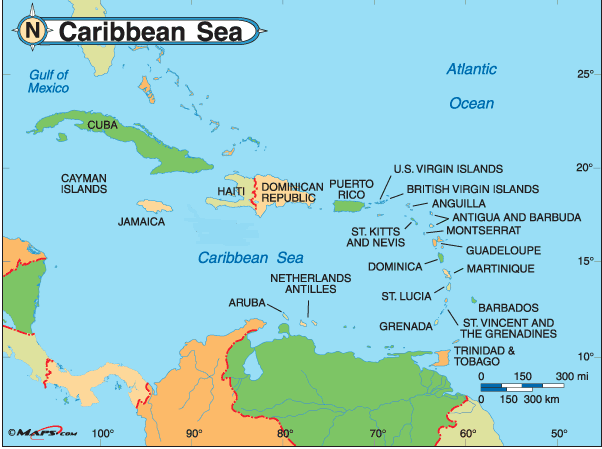
Here's a chart of theIslands of the  Eastern Caribbean. We intend to visit the rest of the islands of the Lessor Antilles. With a minimum of 9 months to go the 600 NM from here to Trinidad, we should be able to spend lots of time enjoying all the local flavours.

Now's the time friends and family - check out the new itinerary(see "Itinerary" tab at the top of the blog, choose your island and "come on down!"

Good to be on the move again.


Post Script: I've enhanced the look of the blog. Hope you like it.
New On the Right:
   Sign in to make sure you don't miss a post.
   Share on Facebook
   Follow along on the Google map - boat is where we are, anchors are where we've been.
New On the Left:
  An easy way to email us
  a list of all time favourite posts

As always the Itinerary is a tab at the top.

Saturday, July 19, 2014

Musings on Cruising

Sunset over Anegada

Yesterday we sailed (yes actually sailed, main sail up and all) out of St Thomas Harbor for the last time this trip. We turned West for a change and headed back to Culebra. Culebra is a small island about 17 miles East of Puerto Rico and 12 miles West of St Thomas. A 20 mile sail anchor up to anchor down. Even though we had 4 - 6 ft swells from the aft quarter it was wonderful to be sailing with the trades rather than against them.

It's been quite an adventure for us, more than I ever thought we'd do. When we fly out of San Juan on July 31st we'll have been aboard Wahoo for 8 1/2 months. That and a question posed by John Edward and Laura while they were visiting made me start to muse about this new life of ours. Just how did we end up doing this? Why has it become so addictive? Do I still miss my New Orleans life?

Snorkelling trips are what I love

As Roy and I talked about it we realised that we just sort of fell into it, no real plan at all!! Yes we'd always loved being near the water and yes Roy had always wanted to own a big sailboat, but we realised we'd never really thought of living aboard. Sure long cruises of 2 - 4 months but not this. When we left New Orleans in 2012 there was no doubt in our mind that we'd be back August through Mardi Gras that year and every year to come. But Hurricane Sandy happened and we went to New York for the winter. Then after picking up the boat in Rio Dulce another summer in Belize seemed called for. Of course, when John Edward needed help in July of 2014 it was only natural to stash Wahoo and go to Houston instead of New Orleans. So re-renting 7th St again and again and returning to Wahoo became the new norm. Somewhere along the way I began to find it thrilling and discovered a totally buried adventurous spirit. Where in the world did that come from?!?  There were two magical moments that will always stand out. A night at Cayo Campo in Cuba with a big full moon above us and the water below as clear as air - it looked like you could walk on the bottom of the sea. Seven weeks later, crossing the Windward Passage and seeing the Southern Cross hanging low on the horizon for the first time...

This laundry and its 1 working machine was a welcome sight!
Seems unclogging heads and fuel lines, studying the weather, taking salt water baths to conserve water, getting excited when we find a laundromat and fresh vegetables was something we'd been secretly yearning  for. Who knew?!
If on top of all that fun we get to sail to exotic places, meet new people and have new experiences along the way all the better.


But every now and then I fish out my New Orleans Girl T shirt so we remember that "I'm a New Orleans girl and New Orleans girls ALWAYS return to New Orleans that's just the way it is; end of discussion."
Cousins! Roy, Susie and husband Dean - these are people we hope to sail with again.

Of all that we get to see and do what we love the most are visits from friends and family. We'd been missing that this year but our stay in the Virgins filled that void. First came Austin and friends, then Roy's cousin Susie and her family came on a cruise so we arranged to spend their day in St Thomas aboard Wahoo sailing, lunching and snorkelling. Lastly, John Edward and Laura took a needed vacation after the trials and tribulations of building his music studio and came for a visit.

Visit to Foxy's is a Must!
Laura, happy, happy, happy on St John
  
Annaberg Plantation Ruins on St John


All in all we were 7 weeks in the Virgins mostly in the BVIs looking for places to do laundry and find fresh veggies. But we managed to get in lots of snorkelling, twice we went to the Full Moon party at Trellis bay plus a sail out to Anegada - the only coral island in the Virgins. Roy even managed to spend a lot of time fixing heads and unclogging our water tanks.


"The lights of St Thomas are 20 miles West, I see General Electric's still doing its best"
From Jimmy Buffet's "Mañana" 

Saturday, June 7, 2014

Ghosts, Goats and Turtles

Raising the BVI courtesy flag
It was a 10 day romp through the Virgins - Spanish, US and British with 4 twenty-somethings aboard. Roy and I were thrilled when it started, exhausted when it finished and wouldn't have missed one minute of it for all the tea in China.

Austin and Amanda joined us on May 20th. A week after graduation for Amanda, finals for Austin. On the 24th, in St Thomas, Will and Natalie would come aboard having just finished their own graduation celebrations. A final great fling for four good friends. Will and Natalie would be heading to California to start their post graduation life, Amanda was off to grad school and Austin would be starting his senior year in Microbiology a week after trip's end. Roy and I were ready for company and had a fast paced agenda ready.

Sea Turtle
There was no time to lose so the very next morning we headed East. Amanda had asked if we would see turtles and our lunch stop at Cayo Luis Peña answered the question. Four green sea turtles popped their heads out of the clear azure water to give us a look-see. They then hung around for Austin and Amanda to snorkel near to them. Cayo Luis Peña is a nature preserve managed by our Dept of Natural Resources. The island has hiking trails and, not knowing the significance, we saw our first wild goats. It's a lovely day stop with mooring balls for an easy way of securing the boat AND you don't damage the coral. A perfect first stop!
"Putting a Price Tag on Nature's Defenses"

We then motored over to the town of Dewey on Culebre, another of the Spanish Virgins. Dinner ashore and an easy overnight had us ready for our second day exploring Culebrita and enjoying "the jacuzzis".  Boulders and cliffs make up pools for the Caribbean to rush through, throwing up spray with each wave that rolls in. Another green turtle met us just as we dropped the hook!

Its not always perfect - we had a rather uncomfortable ride over to St Thomas. A NE swell had kicked up and winds were high. Luckily it was only 26 miles before we reached our anchorage. I had wanted our first stop on St. Thomas to be magical. I didn't realise all that would be waiting.
OMG!! Ghosts of those near and dear came calling: Roger, my brother, Nancy our dear friend even my Mother waited to greet me recalling all the times we visited while Roger and Lindy chartered Island Fever out of St Thomas! They hung around recalling past island stories and rode along the next day when we took a slip in Red Hook at the old marina. (Johnny Harms then, American Yacht Harbor now). I think the arrival of Will and Natalie the next day made Wahoo feel a little crowded for "them".  That morning while we visited in Charlotte Amalie I felt a soft farewell.
Family photo; Megan's Beach circa 1980
("little" Roger, Michele, John Edward, Lindy, Roger, Timmy)

Get that mooring!
Wild Dingy Riding
After our night in Red Hook, we headed for the BVIs and Jost Van Dyke to dance the night away at Foxy's.


It was even Wooden Boat Regatta weekend! Can't get any beta dan dat! Our next stop was Cane Garden Bay and a salute to Jimmy Buffet.


Dinner at Foxy's (dancing came later)

Then came the big day which started with our early arrival at the Baths. A rather long swim to shore (no dinghies allowed) brought us to one of the wonders of the British Islands. The Baths are a hugely wonderful geological formation of immense boulders which tumble on top of each other making for shallow pools on the edge of the Caribbean. Work your way, often on hands and knees, through the maze until you come out on beautiful Devil's Bay.


After returning to Wahoo and grilled burgers aboard to renew our flagging energy Captain Roy turned the boat for a downwind sail through Sir Frances Drake Channel. There was no rest yet - we needed to snorkel the wreck of the Royal Mail Steamer Rhone. This was a British ship which lost its anchor during a hurricane October 29, 1867 and was washed ashore near Salt Island. Again we were happy that the Park Service's mooring balls made for an easy afternoon stop.

Austin, Amanda and Wilfred's in there somewhere!
Evening found us in for the mooring field off of Peter's Island. We had no trouble jumping into the water to snorkel the ledges around the shoreline. But once back aboard it was Amanda who kept hearing a plaintive cry up on a rocky cliff. At first no one else could see the source but Amanda's insistence that something was there had us all looking and listening. As night fell we could hear the cries of what proved to be a young goat stuck, who knows how long, in the brush and cactus on a high rocky ledge. When morning came Austin and Amanda were determined to "Free Wilfred". An expedition was arranged and soon the intrepid rescuers were ashore and climbing the rocky cliff. Austin's superb climbing skills (he is a Capricorn you know) got him close. He tried and he tried to free Wilfred using the boat hook to push and pull the brush aside but nothing seemed to help. Finally he managed to climb higher and with great daring-do grabbed hold of the trapped front leg and pulled it free! With a great leap and to all of the cheering squad's yells, Wilfred was a free goat once more.

Happy Grandma!

The stormy morning couldn't dampen our spirits after that. So even
Good Friends
 though we had to skip snorkelling The Indians we all rode into Road Town on our natural high. Which was a good thing because if anything could have dampened our spirits Road Town was it. From the inability to get Pussesr's Rum's guidebook deal to the sad look of the town itself and the depleted shelves of the "supermarket" it was the one spot that missed the mark. (Except for our waitress Lucy - only the menu's Bull Foot Soup was available but Lucy made the meal memorable.) Perhaps it was knowing that our time together was coming to an end. The next morning we were headed back to Red Hook.

Spirits picked up as we took a rogue ferry ride to St John's and Cruz Bay. Its hard to stay down when you're having lunch and browsing the shops at Mongoose Junction. May 30th came and we bid adieux as the four "younguns" took a Safari taxi in to Charlotte Amalie for one last look around. Roy and I took Wahoo and their luggage into St Thomas Harbour where we all said our last goodbyes.
It's Been Fun!


.


Sunday, May 18, 2014

Been There, Done That!

one martini too many - but whose counting.


WE DID IT!
Arrived in Puerto del Ray Marina on the Eastern coast of Puerto Rico this morning. Over 1700 Miles and 7 countries from late February to mid - May. Can hardly believe it!

You'll see no pictures of Puerto Rico as all we did since arriving late Monday May 12th was get up each morning between 3 & 4 sail 20 miles, get errands done, crash and do it again until we arrived here in Fajarado at the Marina.

The only way to cross the Southern coast of Puerto Rico is to use Bruce Van Sant's method
(The Gentleman's Guide to Passages South - the Thornless Path to Windward). The Trade Winds are brutal on the South coast of both Hispaniola and Puerto Rico but they were especially so this last week. Each day was the same; the night lees started about 9pm and all night the boat could rest in calm waters. The Katabatic Winds came down off the mountains during the early morning hours giving a land breeze from the North of 10 - 12 kts until the trades kicked in and the wind switched to East against us. It started building often before 9am and we would be in gusts of 25kts which either continued or got worst as the day progressed. So by sailing about 4 - 5kts an hour we could make 20 - 25 miles between 4 & 9am. That's how we did it.

There is a rather funny story about clearing back in to the US. Seems the most important thing is...
wait for it...
Your Garbage!
Do Not dispose of any foreign garbage except in designated "Foreign Garbage" bins. Of course, there are No, None, Nil, Zero, Zilch  foreign garbage bins anywhere. 

Our goal was to reach Puerto del Ray today, Sunday May 18. We need to add more chain to our secondary anchor (remember the story of us dragging during a 4 day blow while in Cuba?). Plus lots of laundry, provisioning, cleaning the boat and performing the odd chore or two (or ten).

All this before Austin and Amanda arrive Tuesday evening. We set sail for the Virgins on Wednesday. Their friends Will and Natalie join us in St Thomas on May 24th. We'll have both college graduates and college seniors on board.
CELEBRATION TIME ON WAHOO!

Saturday, May 10, 2014

Hispaniola, Saint Domingue, Santo Domingo (What's in a Name)

I've never understood the naming of this island! AND its important if you're from New Orleans because starting in 1804, after the revolution that created Haiti, New Orleans' population doubled. 90% of all Haitian refugees eventually settled in the Crescent City. Immigrants of all colors (2,731 whites, 3,102 free people of colour and 3,226 slaves) brought their architecture and culture with them. Their culture became the dominant creole culture in New Orleans and exists to this day.

Harbor - Ile å Våche
Haitians played a major role in developing New Orleans cuisine and preserving the city's French character. Jean Lafitte came from Port au Prince and Marie Laveau was born in Santo Domingo. Maybe most important for those of us who love Greg's sazeracs is Antoine Amadee Peychaud who eventually called New Orleans home and went on to invent Peychaud Bitters.

When Columbus stumbled upon it  in 1492 losing his flagship, Santa Maria, in the process he named the island La Esla Española, Hispaniola for short. The following year Spain started colonisation in earnest and by 1496 had founded a town they named Santo Domingo. It's the oldest permanent European settlement in the New World. Some charts started calling the island Santo Domingo.

Pack Horses bring supplies to market
By 1503, with gold pouring in from its other colonies, Spain lost interest in Hispaniola and pirates overtook the island eventually establishing permanent bases on its flanking islands of Tortuga and Ile å Våche. In 1606 the Spanish governor abandoned the island except for the area around Santo Domingo leaving the rest to pirates. By the middle of the 17th Century French colonists started establishing themselves on the Western 3/8s of the island and in 1665 this was sanctioned by a treaty between France and Spain and Saint Domingue became the French name. Saint Domingue became wealthy on coffee and sugar profits and eventually was considered the "Pearl of the Antilles" due to its wealth and population.

The wealth was built on the back of one of the cruelest slave systems ever to exist. Reports abound about unbelievably horrible methods of punishment. The treatment was so harsh that Hispaniola was importing a record 40,000 slaves a year and was never able to "grow their own". Whether on a Spanish or a French plantation more slaves died every year than any where else in the Caribbean.

In 1789 the French Revolution touched off slave revolutions throughout the Caribbean. In Saint Domingue it pitted free people of colour against French planters who would not grant them citizenship accorded in the "Declaration of the Rights of Man". Thirteen years of revolution ensued with Toussaint L'Ouverture leader of the Saint Domingue rebellion joining forces with Spain then jumping back into the French camp when France abolished slavery in its colonies in 1794. The Spanish fled and in 1797 Toussaint was made Governor for Life of the whole island named by its French name of Saint Domingue. But in 1802 with Bonaparte now leading France and re-establishing slavery Toussaint rebelled again. He was captured, exiled and killed; but the revolution continued under Jean Jacques Dessalines and Henri Christophe. In January, 1804 a new nation was born that called itself Haiti. The first free black republic in the world, the first independent country in the Caribbean.

We bought giant stone crabs from  Haitian fisherman


Control of the entire island was lost in 1808 when, with the aid of Great Britain, the Eastern portion of the island was returned to Spanish control laying the foundation for centuries of dispute between the two sides of the island. It wasn't until 1844, after years of wars, that the Dominican Republic was finally a free and independent country. However, Haiti continued its attempt to retake the whole island. In the DR it was near chaos. A series of inept and corrupt governments with near constant internal political instability led, in 1861, to the Dominican government reverting to colonial status with Spain. Spain abandoned the island in 1866. After much political fighting and an attempt to have the US annex the Dominican Republic a tenuous political peace was accomplished in 1880.

The US has continued its "interference/support" in both of the island's nations and while much progress can be seen in the Dominican Republic, Haiti continues to struggle especially after the earthquake of 2010.

We left Jamaica to travel the South Coast of Hispaniola, the 2nd largest island in the Greater Antilles. Motor-sailing out with the remains of a cold front stalling the trades. We had an easy reach for the 165NM passage from Jamaica across the Windward Passage to the anchorage at Ile å Våche on the SW coast of Haiti. Ile å Våche has been a stop for sailors since the 17th century when pirates used it as a stronghold. Today's cruisers use it as we did, a stopping point as they cross from one side of the Caribbean to the other. It has a wonderful harbour, as long as the wind is not out of the North.


As we arrived the "boat boys" surrounded Wahoo offering services and help. Even though we'd been warned, it was a bit daunting, as there had to be at least 25 of them. We had advice on who to use and who not to use from many of our cruising friends. But we were tired after our 30 hours at sea and didn't want to deal with this. Roy was referring everyone to me! I was trying to remember names! Yikes! Finally thinking I remembered the name Justin coupled with the fact that he was one of the quiet, polite boys, I chose him. Next I arranged to meet with Jean Villem about getting internet. Little did I know that of the two guys I chose they were the ones whose families were at war. A little Hatfield and McCoy right here on Ile a Vache.
Bringing their catch to market

There's an orphanage on the island as there are many orphaned children in Haiti both as a result of the AIDs epidemic and the earthquake. So next morning the first use of our "boat boy" was to get us to the orphanage to deliver supplies we'd been gathering for a year in anticipation of this trip. We went by dingy around the island and landed where the market takes place. We've been in many markets but never anything like this! The colours, the smells (good and bad) the amount of people milling about. Thankfully we had Justin guiding our way.

To get to the orphanage we walked up the hill to deliver our supplies and ran into a group of AID workers. They were pouring concrete for sidewalks, building and painting classroom furniture, doing any number of projects. Its was a Catholic group from Ireland. After a walk through the compound, an argument ensued between Justin and another Haitian who seemed to want to take our supplies for himself and our inability to find Sister Fleur - she was down in the market. We left our things with one of the Irish workers feeling they would get to the right place.

crowded market scene
French Hotel is a different world yet right up the hill
Walking back to the dingy we could see how difficult life is in Haiti even on this island where things "aren't so bad". Amazingly there are three hotels on the island. Not that it isn't beautiful with white beaches and palm trees just like other Caribbean islands; we just couldn't understand wanting to vacation where life is so hard for the locals. The little shoreside village has no electricity. The market is the only way to get supplies. Fishing from small sailing sloops, a little farming, working in the hotels and helping the visiting cruisers is how they eke out a living.

There's a beautiful French hotel that overlooks the harbour. We made arrangements for dinner wanting to see that side of things also. It was beautifully landscaped with a lovely open air dining room. Not much choice; fish or cow (honestly that's what they asked), but beautifully served.

It was a short stay as we needed to move on to the Dominican Republic. We left the next day for an anchorage at Isla Beata, DR. The weather was no longer so benign and Chris Parker was advising us to wait. But as he couldn't give us a better date for the next week and things were to get worse every day, we knew we had to go. It was a beautiful night sail to Isla Beata with phosphorescence in the water, a starry, starry night above and the Southern Cross hanging low on the horizon. But the winds were strong from the direction we needed to go and even though we were motoring we ended up tacking the next afternoon wondering if we would ever make the anchorage that was right in front of us at Isla Beata.

Dramatic coastline of the DR
Two days later we left Isla Beata for Barahona, where we would clear in. We motored through the pass between the island and the mainland constantly scanning the waters as our depth sounder continued to give trouble. Once out of the pass we rounded Cabo Beata  and once again were in winds gusting to 35kts with high seas. This time we knew to just grit our teeth and get on with it. Well we knew that until the dingy started to come undone! Now Roy had to manoeuvre to the stern and retie lines that had separated. On went the life jacket and he clipped into the webbing that runs stem to stern for just such an occasion. Inching his way back he secured first one side then the other before returning to the safety of the cockpit. Whew! We motored up the peninsular and finally started seeing winds and seas begin to abate as we approached Barahona 8 hours later.

Grinding conch for fritters
We spent a pleasant 3 days in Barahona to clear in, get provisions and fuel. The anchorage is in front of Club Nautico, the name does NOT reflect the place. It's a small bar with a couple of rickety wharfs. The Marina Guerre came to the boat with our new "boat boy", Fernando. He really was a huge help. We didn't have long to stay here and he got us around, arranged for laundry, fuel and even brought me a larimar  (a local blue stone) pendant.  To avoid the winds we left at daybreak for the 30 mile motor sail across the bay to Salinas. The stop in Salinas allowed us to shorten the next hop on our Eastward trek. We anchored in front of the hotel Salinas. They have a bar and restaurant plus a dock with about 20 slips. The slips have electricity, water and WiFi all for about .50 per foot per day. We enjoyed meeting Jorge, the manager, who is such a help to visiting cruisers. He allowed us to jerry can water to Wahoo even though we were riding at anchor. The restaurant was very pretty and it overlooks the bay but do not come to Barahona or Salinas for the food!

It's windy all day but calm at night in the DR. The katabatic winds from the mountains create a calming effect overnight until about 10am in the morning so it's best to sail either overnight or have a very early morning departure, depending on what time you need to arrive at your next destination. You never want to arrive in a new port or anchorage in the dark!

In the Dominican Republic you have to get a despacho to move from port to port. We were charged $25 for a despacho in Barahona but not charged for one in Salinas. Other than that clearing-in was $43 for the boat and $10 for each crew member. This price was in Barahona, there could be other prices in other places. Marina Zarpar in Boca Chica charges $180 for clearing in and $50 for a despacho. Their excuse for this exorbitant fee is that officials have to come 12 miles from Santo Domingo!

Tomb of Christopher Columbus
Columbus and his son, Diego
Our next stop after Salinas was Marina Zarpar in Boca Chica about 65NM away. We left Salinas around 5pm and arrived at the marina around 7am. Underway the boat got a thorough fresh water rinse when we encountered a squall with heavy rain. Zarpar is a nice marina with great amenities. We took a mooring for about $20 US a night. They have a coin operated laundry, a small restaurant and decent WiFi.

While there we arranged for a trip to visit Santo Domingo. This was a great day. We felt very upclose and personal with the entire Columbus family: Christopher, his brother, Bartolome, and his son, Diego. Not to mention so many firsts - the first cathedral, first fort, and of course the first European settled city in the Americas.

The only bad thing about Marina Zarpar is Customs and Immigration. You have no choice but to use the service out of the marina and it is both ridiculously expensive and offers no consideration for the safety of the cruisers.
An impressive ceiling view of the Jesuit church in Santo Domingo


Cool seat in the home of Bartolome and Diego Columbus
Buying fish from a local fisherman at Isla Saoma
We needed to clear out of the country here, as our next stop was just an island where we would wait for a weather window to cross the Mona Passage to Puerto Rico. Here's where we first heard that they doubled the price of the despacho. Next we learned that we could not get an early departure as they MUST give you the despacho the moment you are leaving and you can only get it during their working hours of  9 - 5. This is unlike the procedure in either Barahona or Salinas where the dispacho is issued within the 24 hr period prior to your departure. Of course, they can't say when they will get to your boat with a drug sniffing dog which has to go through the boat before you can leave! (Guess they want no drugs LEAVING the country.) The best we could arrange was for them to meet us at the fuel dock sometime between 4 and 6pm then we could anchor until we were ready to leave at "safe light" the next morning. That doesn't sound too bad except that there is no good anchorages in the vicinity. But to make things worse we waited and waited, they didn't come until 7:30pm and by then it was dark and squally. I just had to "assert" myself! Finally it was agreed that we could stay the night but they would have to change the date on the depacho. They would be there by 8:30am - not so good as this now has us sailing as the winds get higher and the forecast is calling for squalls. But the next morning they made matters worse. They decided they needed to bring the dog back. We waited and waited not really able to get underway until 10am! Unfortunately for Marina Zarpar the arrogance of the officials undermines all the excellent efforts Rigo and the marina staff are trying to accomplish.

We finally arrived at Isla Saona as daylight was fading and anchored in front of this lovely island. We are anchored here as we wait to cross the Mona Passage and enter US waters for the first time since May of 2012.
Isla Saona gets over a thousand day-trippers each day. They are brought in for a beach party by sailing catamarans. Here's Wahoo anchored among some of the visiting cats


Monday, April 21, 2014

Jamaica Farewell


Jerk Chicken and Red Stripe with "Festival", Yumm!
It was a high wind passage from Cuba. Forecasts had called for moderate conditions with 15 kts of wind leaving Santiago de Cuba building to 20-23Kts mid passage than back down to 15kts on our approach. Seas were forecast to be no more than 6 ft in swells with a long interval all out of the East to South East making for a broad reach throughout the 120 NM/ 24 hour SSW passage.

Unfortunately as the winds started to build they never stopped! Eventually reaching 35kts with seas building as high as 15 ft. Luckily the direction was correct so it was a broad reach and Wahoo did her thing rising up the swells peering over and then sailing  down. We had already doused the jib and were sailing with a reefed main so we had a steadying sail already in place. Actually it was about as good as possible under the conditions and while neither of us slept we made Port Antonio in a reasonable amount of time as we were able to sail at about 5kts throughout it all.

While it's not something I want to do again I must say that the really bad part was wondering what the Windward Passage had in store for another Marcomb. While we weren't directly in the passage we were in the approach to it. For any of you who know the story of my brother and his wife, Roger and Lindy, when they hit a storm in this passage and barely escaped with their lives you'll understand my feelings.


Port Antonio - street work in progress
But Jamaica was all we could wish for and then some! As soon as we reached the entrance to the harbour its protecting arms sheltered us from the seas. Once inside, the mountains calmed the effects of the wind. This is the most sheltered and lovely harbour we've ever been in. The dockmaster said that even when Hurricane Sandy passed over there were no ill effects.


The marina, Errol Flynn, is named for the famous actor as he kept a boat here as well as a home. In fact his wife just died and left their 2000 Jamaican acres to their grandson. It's also the best equipped marina we've ever been to. There are both slips and an anchorage, power, water and WiFi, plus a laundry. Also onsite is a pool with bar, beach with beach bar plus a restaurant and bar - all overlooking the beautiful harbour with its surrounding hills and mountains.

The Harbour from a Port Antonio hilltop
Port Antonio is on the NE coast. The town and market is an easy walk away and the lush Jamaican mountains are all around. Its away from the touristy parts of the island and yet offers plenty for the visitors who come and stay for awhile. Beautiful homes dot the hillsides looking out into the Caribbean Sea. I gather they mostly don't belong to Jamaicans.

Having visited twice on a cruise this time we found a much more natural Jamaica filled with the delight of mixing with locals in a relaxed setting.

Roy being Roy at Boston Beach

Boston Beach where Jerk was "invented"


Getting Jerk chicken
Eating Jerk Chicken
We finally felt like we were on vacation and entertained ourselves with a trip to Kingston to the Bob Marley museum and Port Royal, another excursion took us into the mountains for a hike to  Reach waterfall. We enjoyed beaches with their powdery pink sand and crystal clear waters.

We ate lots and lots of jerk chicken and pork. Jerk is served with a seasoned fried dough they call Festival. No one could explain the name. But it sure is good.


Part of Reach Waterfalls. We jumped in the falls, swam at the falls and went through a cave into the falls. Regular tourist! 


We hate to say it as we could have stayed lots longer but JAMAICA FAREWELL!

The marina even seems to have its own Rasta -rafter who comes to the boat to offer coconut water, bananas, breadfruit and ganja.


Tomorrow we're off for a 165NM passage to Ile a Vache, the island on the SW coast of Haiti which is a must stop on every cruisers bucket list. Benign weather is in the forecast as we actually cross the Windward Passage. All the weather forecasters say the same so lets hope the stars align and we actually do get 5 - 10kts of wind with seas no more than 4 ft all from the East which is the only bad part of the forecast as usual -  we're going East.